

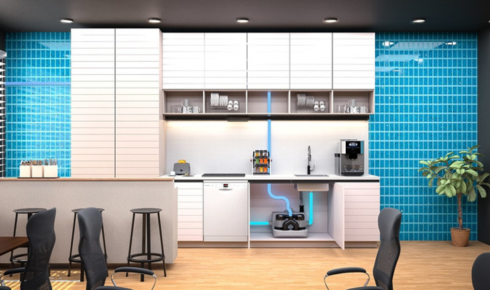
Modern commercial spaces are rapidly moving away from static layouts where everything must be pre-planned during construction. Offices are reimagining collaboration zones, cafés are expanding service areas, and co-working spaces are constantly reconfiguring their interiors to stay agile. But one element often gets in the way of flexibility: conventional plumbing.
Traditional plumbing systems rely on gravity-fed drainage and need fixed floor connections. That means adding a new sink, pantry, or utility area typically involves breaking tiles, cutting slabs, and costly civil work. These limitations slow down renovations, disrupt operations, and eat into budgets, especially problematic in busy commercial settings.
Smart plumbing solutions are changing that. By using advanced wastewater lifting and pumping technologies, commercial spaces can install sinks and pantry utilities almost anywhere, without breaking floors or redoing the building structure. This opens up exciting design possibilities for offices, cafés, and co-working hubs.
Why Conventional Plumbing Limits Interior Flexibility
In a typical setup, plumbing fixtures such as sinks must be located near existing sewer lines to allow wastewater to drain naturally. This often confines pantries or wash areas to fixed corners of the building. Any change or addition later in the process means:
- Breaking finished floors
- Hiring civil contractors
- Shutting down workspace or cafés
- Delaying fit-outs and increasing budgets
For commercial interiors that need adaptability and quick turnarounds, conventional plumbing becomes a bottleneck.
Smart Plumbing: The Key to Flexible Interiors
Smart plumbing systems use compact lifting pumps to move wastewater from grey water sources like sinks, dishwashers, and coffee bars to drainage lines, even when gravity drainage isn’t available. This means plumbing no longer dictates design, designers and business owners get to decide.
These systems allow:
- Installation of sinks and pantries away from existing soil pipes
- Minimal structural intervention
- Quick retrofits in finished spaces
- Reconfiguration of interiors based on evolving needs
Whether it’s a new pantry in an open-office floor or additional handwash stations in a café, smart plumbing removes structural constraints.
Bringing Flexible Pantries to Offices
Modern offices are no longer content with a single pantry tucked away in one corner. Teams want:
- Coffee bars on every floor
- Multiple snack and beverage points
- Handwash stations near meeting areas
- Utility sinks for cleaning stations
This is especially true for tech offices and collaborative workspaces where employee experience is a priority.
Commercial-grade lifting systems make this possible. For instance, the Sanicom 2 is engineered for demanding grey water applications in offices. It can handle wastewater from sinks, dishwashers, and similar utilities, ensuring that adding a pantry or sink doesn’t require any floor breaking or major civil work.
By decentralizing plumbing, offices can scale amenities quickly and efficiently while maintaining aesthetics and functionality.
Empowering Cafés and Quick-Service Restaurants
Cafés and quick-service restaurants often contend with limited space, especially in malls, business districts, or retrofit sites. Adding additional sinks for hygiene compliance, prep stations, or customer-facing beverage bars becomes complicated without easy access to drainage lines.
Smart plumbing systems help food service businesses:
- Add handwash sinks behind counters
- Expand prep areas
- Install utility sinks closer to workstations
- Meet hygiene requirements without expensive renovations
Products like the Sanispeed+ are designed for high-flow environments, making them ideal for cafés and QSR spaces where usage is frequent and performance matters. These pumps handle warm grey water typically produced in food zones while fitting discreetly under counters and in pantry areas.
This means cafés can adapt their layouts quickly and confidently, improving operations without structural disruptions.
Co-Working Spaces Designed for Change
Co-working spaces thrive on flexibility. Members expect modern amenities, collaborative zones, private booths, and vibrant common areas. Because tenant needs change frequently, plumbing cannot be a fixed constraint.
Smart plumbing systems enable co-working operators to:
- Add micro-pantries on different floors
- Convert unused corners into tea/coffee points
- Install sinks in event spaces or breakout zones
- Scale up amenities fast without flooring work
With compact wastewater lifting solutions, co-working interiors become truly modular, just the way modern users want them.
Minimal Disruption, Maximum Efficiency
One of the biggest advantages of smart plumbing is how little it disrupts daily operations. Since there’s no need for extensive floor cutting or slab work:
- Installations are quick
- Noise, dust, and downtime are minimized
- Interiors remain intact
- Businesses stay operational
For commercial hubs in busy metros like Mumbai, Delhi, or Bengaluru, downtime can mean lost revenue. Smart plumbing helps businesses make improvements without closing doors or halting service.
Built for Commercial Performance
Commercial environments require reliable performance. Smart plumbing systems aren’t temporary solutions; they’re engineered to handle regular use, warm grey water, and varying flow patterns.
Key commercial advantages include:
- Compact design to fit under counters and in confined spaces
- Quiet operation compatible with office and hospitality settings
- Hydraulic performance suited for multiple fixtures
- Flexible installation without major construction
This reliability makes smart plumbing a long-term investment in building utility infrastructure, one that supports growth without recurring renovation costs.
Designing for the Future
Flexibility isn’t just a trend, it’s a business necessity. As companies rethink office layouts, hybrid work continues, and consumer habits evolve, the built environment must adapt faster than ever. Smart plumbing gives designers and facility managers the freedom to respond to these shifts without being tied down by conventional infrastructure.
Whether it’s setting up a new pantry, expanding café utility zones, or creating multiple wash areas in a co-working hub, flexible plumbing creates opportunities for better space utilization and user experience.
Conclusion
The demand for adaptable commercial interiors is rising across India. Offices want more pantries and utilities. Cafés need easy installation for sinks and prep stations. Co-working spaces seek modular layouts that can be reimagined regularly.
Smart plumbing solutions make these possibilities real by removing the biggest constraint in interior design: fixed drainage. With products like Sanicom 2 and Sanispeed+, commercial spaces can enjoy true design flexibility without costly floor work or lengthy renovations.
By integrating smart plumbing into their fit-out plans, businesses unlock better space performance, smoother operations, and future-ready interiors, all while keeping disruption to a minimum.